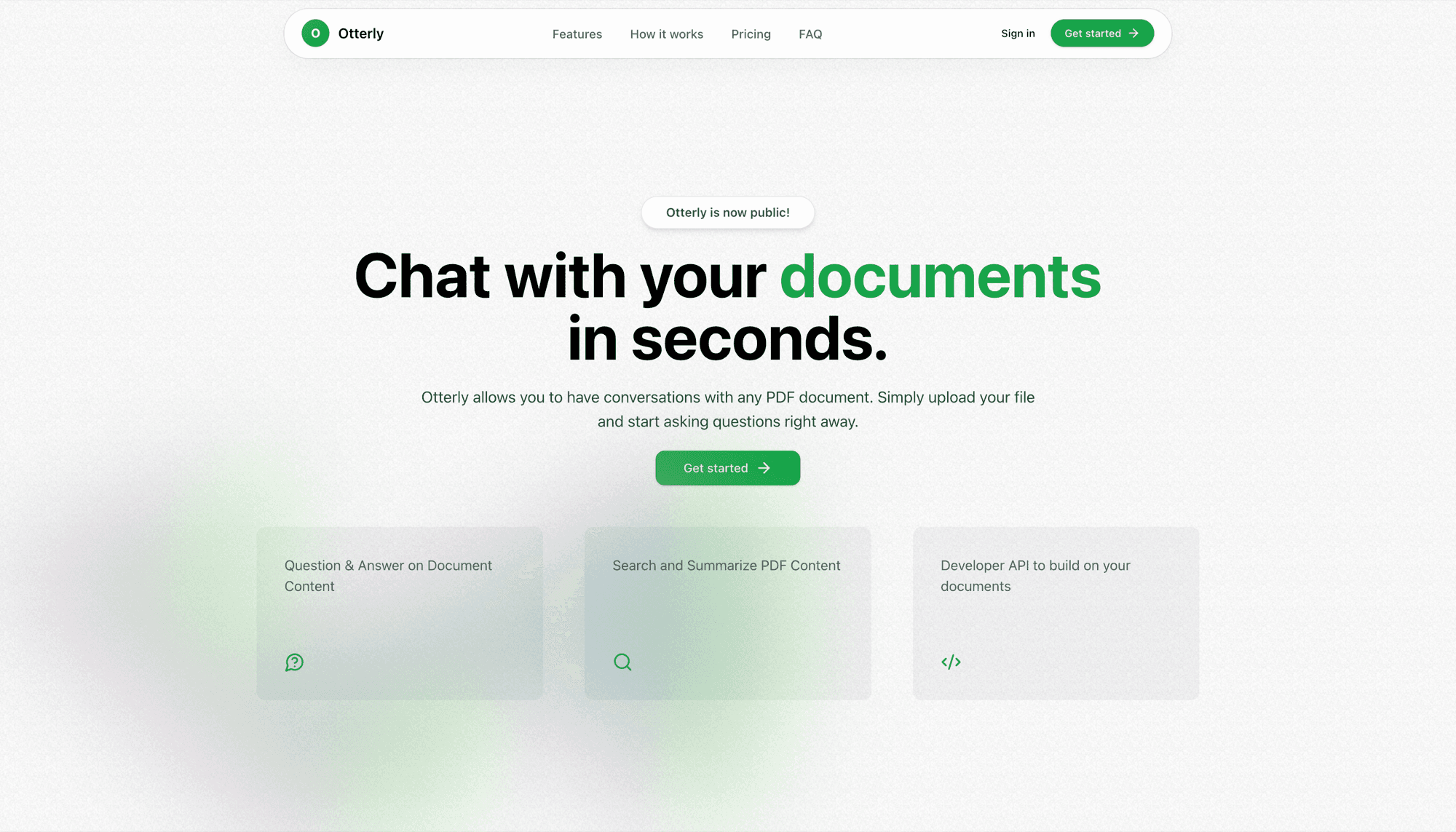
An AI document assistant that turns any PDF into a conversation, so people find what they need without scrolling through pages.
Otterly lets users upload a PDF and start asking questions right away. Instead of searching page by page, they ask in plain language and get answers grounded in the content of their own document.
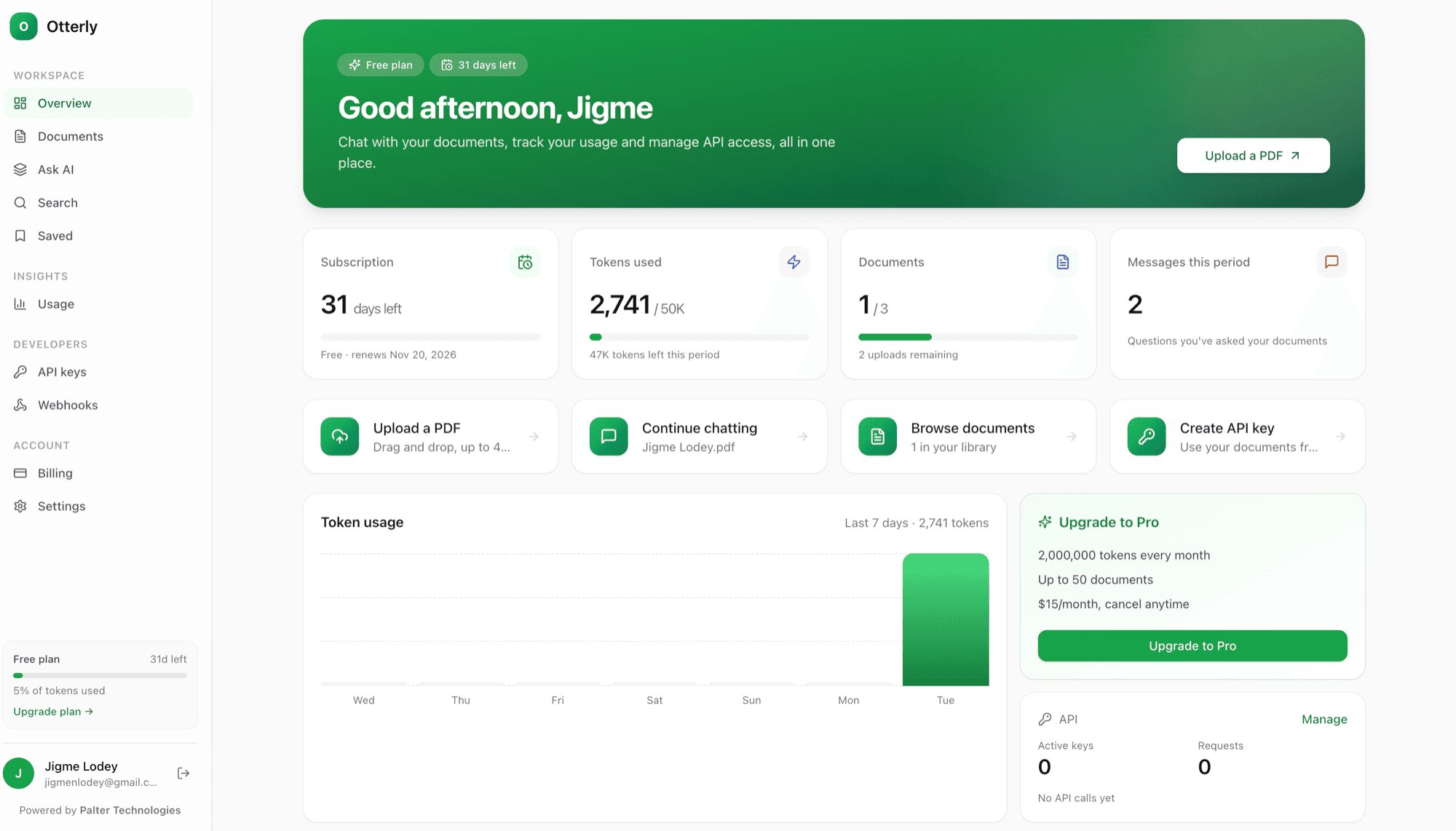
Around the chat sits a full workspace: a document library, search, saved answers, token and message usage, subscription and billing management, and a dashboard that shows plan limits and recent activity at a glance.
Built with Next.js, TypeScript, Tailwind CSS, and Prisma, with Better Auth for sign-in. Documents are embedded with Gemini and stored in a local vector store, and answers are generated with Groq. Otterly also exposes an API with key management and webhooks so the same capabilities can be built into other products.
Key Features
Chat with any PDF
Upload a document and ask questions in plain language, with answers grounded in what the document actually says.
A full workspace
Document library, search, saved answers, and a dashboard that shows recent activity at a glance.
Transparent usage
Token, upload, and message usage are shown against plan limits, so nobody is surprised by a cut-off.
Free and Pro plans
The free plan includes 50K tokens and 3 documents. Pro raises that to 2M tokens and 50 documents.
Developer API
API keys, request tracking, and webhooks let other products use the same document Q&A.
Secure sign-in
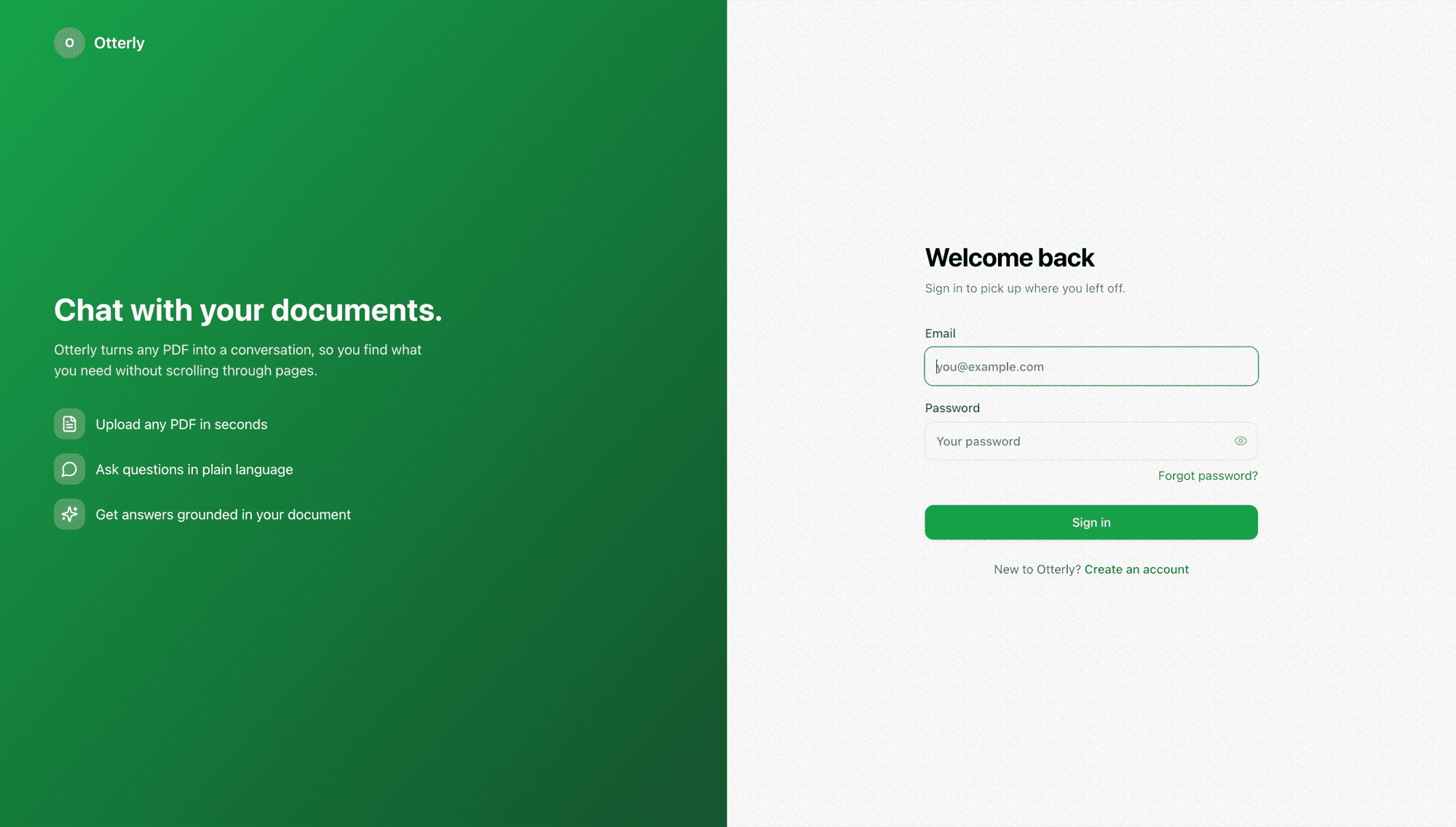
Account sign-in and sessions handled with Better Auth, behind a focused login experience.
How It Came Together
- 1
Ingest
A PDF is uploaded, its text is split into chunks, and each chunk is embedded with Gemini.
- 2
Store
The embeddings are kept in a local vector store, linked to the user and document through Prisma.
- 3
Retrieve
A question is matched against the stored chunks to find the passages most relevant to it.
- 4
Answer
Groq generates the reply from those passages, and token usage is recorded against the user's plan.
Technical Implementation
Making answers trustworthy and usage predictable — grounding responses in the uploaded document, while metering tokens, uploads, and API calls per plan so limits are visible to users before they hit them.
"People do not want another chatbot — they want the answer from their document, and proof of where it came from."
Outcome
Otterly is public with a landing page, onboarding, a usage dashboard, a free and a Pro plan, and a developer API, so the whole path from sign-up to asking a first question works in one product.